
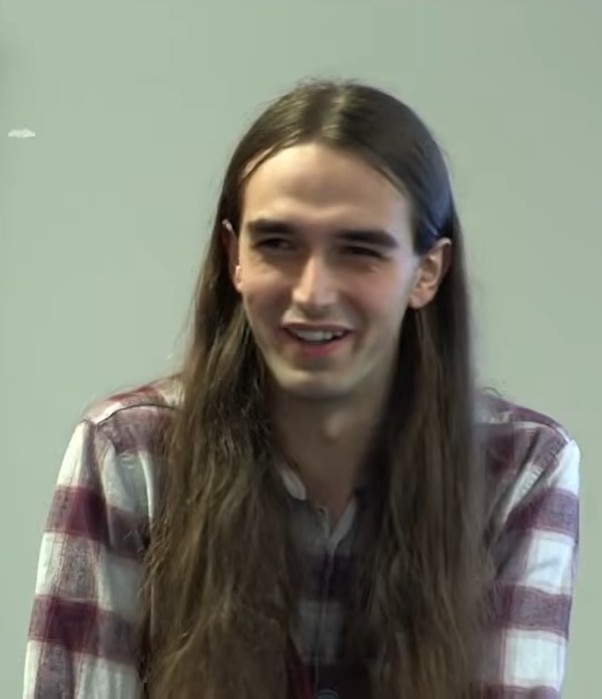
On the final day of the 2026 General Synod of the Scottish Episcopal Church, it was an unscheduled motion which prompted the greatest debate and a very close outcome, settled by just a handful of votes.
On Day One of Synod, members had heard from Provincial Youth members who outlined their hopes for what full members of Synod would keep in mind as they wenmt about the business of the formal agenda. One of them, Amie Byers (Glasgow & Galloway), proposed the introduction of Youth Representatives as full General Synod members, giving them the ability to speak and vote, making their participation not just symbolic, but substantive.
“We should ensure young people who are willing to serve are able to do so,” said Amie.
On Day Two, the Rev Canon Dr Sophia (Diocese of Edinburgh, pictured above) put forward a Rule 10 motion calling for this idea to be taken forward by Synod, and on the final day of Synod, members debated an amended motion which stated:
This Synod requests the Faith and Order Board to instruct the Committee on Canons in consultation with the Provincial Youth Committee to prepare proposals for the 2027 General Synod for the amendment of the Canons to admit elected youth members, as full members of the Synod representing each of the dioceses, and to design a mechanism for their election.
“Amie gave us a very real and do-able challenge. She reminded us that she sits on the Anglican Consultative Council as a full representative; that she is included in the committees as an equal voice to draft agreements and statements. And then she comes back to her home province and she speaks to Synod but not with Synod. When we start to think of other matters affecting the life of the church, the young people have normally gone home.
“A simple thing that we could do is to show that we really value their contributions and see them as full members of this church is to enable them to have dedicated youth representatives from every diocese as part of this diocese,” said Dr Marriage. “It is positive discrimination at its best.”
She added: “This is about culture change. This is about making a statement about the important of young people. It’s about saying they are central to our church life and its mission.”
There followed a series of impassioned contributions from the floor, with a healthy exchange of quite differing views taking place as Synod looked for a way forward.
Dr Susan Burr (lay members, Glasgow & Galloway) and the Rev Bonnie Evans-Hills (St Andrews, Dunkeld & Dunblane) both offered advice and caution from their personal experience regarding issues to consider when finding and recruiting young people who are able to serve, before Dr Beth Routledge (lay member, Glasgow & Galloway) explained why she would vote against the motion, saying that the mechanism for young adults (over 16) to become full members of Synod is already in place, and calling on young members to come forward to take the opportunity that is there. “Young people of the Scottish Episcopal Church, you are not a second tier class; you are not separate but equal. You are not ‘other’ or something we should talk about, like a problem to be fixed. You are fellow Scottish Episcopalians and there is a place at the table for you, if you are willing to take it.”
The Very Rev Kelvin Holdsworth (Standing Committee) also expressed his concerns which led him to call on others to reject the motion with him, not because of what was behind the motion, but because of unintended consequences, such as the house of laity becoming bigger in relation to the house of clergy. It makes me a little concerned because we are not a conference, we are a decision-making body in which all kinds of things about my working life are discussed, and it is right and proper that clergy have quite a significant role, in the company of lay people, in making decisions about that. To make one of the houses suddenly bigger gives me concerns. I am not concerned about the voice of young people being raised up in our church because I believe in that very strongly.”
Instead of accepting the motion, Provost Holdsworth reminded Synod members that they have the power right now to bring young people to Synod next year – which will be faster than putting a new formal process in place.
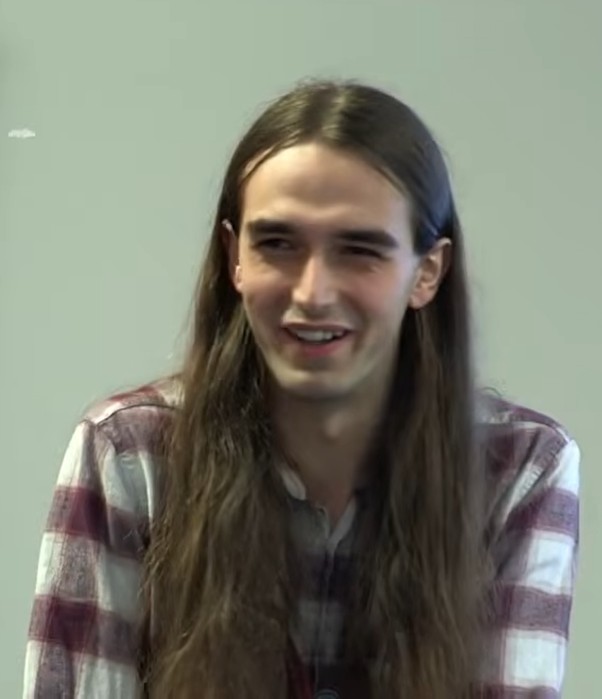 However, a contribution from the youngest Synod member present, Reuben Thomasson (lay member, Glasgow & Galloway, pictured right) appeared to swing Synod towards carrying the motion.
“I was elected to this Synod last year, at the age of 18,” said Reuben. “Looking round, by quite a long way I am the youngest member of this Synod. One of the barriers that young people face coming to Synod is that they would be here on their own, and I speak as someone who is here on my own as a young person. One thing that designated youth membership can solve is that young people can then come to Synod as a group with peers, and that might make it easier to come.
“Clearly the existing processes that we have are insufficient to bring the numbers of young people that we want to see, to this Synod, and clearly the Provincial Youth Committee consider them insufficient. I commend this motion to Synod.”
Reuben was backed by Canon Alistair Dinnie (Edinburgh), who recalled his experience as an SEC representative on the Anglican Consultative Council. “Young people’s places at ACC were not always a thing,” said Canon Dinnie. “In my view it [appointing youth members] changed the ACC profoundly for the better,” said Canon Dinnie. “If it happened there, I do not see why it can’t happen here.”
The Rev Canon Chuks Iwuagwu (Glasgow & Galloway) made a telling contribution by admitting that he had been ready to reject the motion until he had listened to Reuben Thomasson, and suggested that Synod members could take both suggested courses of action: find young people to appoint next year, and at the same time begin the process of looking at the feasibility and practicality of making youth appointments a requirement for each diocese.
“Reuben, I will do my utmost best to make sure you are not alone next year,” said Canon Iwuagwu.
Synod carried Dr Marriage’s motion, which had been seconded by the Rev Canon John McLuckie (Edinburgh), by a simple majority in one house with 52 for, 45 against, and six abstentions.
Earlier, following the presentation from Bishop Anthony Poggo at the start of the final day, the Rev Canon Dr Charlotte Methuen, Convener of the Inter-Church Relations Committee presented an update on the SEC’s responses to the Nairobi-Cairo Proposals – a series of proposals from the Inter-Anglican Standing Commission on Unity Faith and Order which aim to update the way that the Anglican Communion describes itself to take in to account the dramatic changes in the Communion over the last century.
The responses to the original proposal and the more recent supplement from the Scottish Episcopal Faith and Order Board raised several concerns about the definitions of the Communion that have been proposed, including the ambiguity of phrases like “historic links with Canterbury,” and use of the Book of Common Prayer. Dr Methuen highlighted that these definitions are potentially exclusive of churches, including the Scottish Episcopal Church, with complex (or non-existent) historic relationships with Canterbury. She raised other practical implications of the proposals, including the fear that the proposals might be a “retrograde step” down from full communion towards federation, creating two-tiers of Anglicanism rather than a true Communion of churches.
The Synod, having heard this, was asked to support a motion once again affirming the SEC’s commitment to the Anglican Communion. The motion, whilst recognising the need to revise the definition of the communion last set out in 1930, requested the Synod’s backing for SEC delegates to the Anglican Consultative Council, the Very Rev Kelvin Holdsworth and Dr Beth Routledge, to ask for amendments to the proposals in accordance with the SEC responses. This was approved overwhelmingly by the Synod.
The Synod then approved two updates to the list of Churches in full communion with the SEC to add the Evangelical Lutheran Church in the Faroe Islands, who last year joined the Porvoo Communion, and to change the listed name of The Latvian Evangelical Lutheran Church Abroad to The Latvian Evangelical Lutheran Church Worldwide. The denomination had changed its own name following the re-establishment of a presence in Latvia for the first time since the Second World War.
In the final session, Synod quickly debated items including a rewrite of the Digest of Resolutions to make the language gender inclusive, approved the setting of quota for the year at £820,000 (an increase of £35,000 on the previous year) and approved the appointment of the Rt Rev Dr John Armes, the former Bishop of Edinburgh, as a trustee of the Scottish Episcopal Church. Synod also heard from the Very Rev Susan Green, the Dean of Cloyne in the Diocese of Cork, Cloyne and Ross, who brought greetings from the Church of Ireland.
The formal business of the Synod having been concluded, the Primus thanked all the groups who had been involved in organising the Synod, and advised the Synod that he had received notice from the Rt Rev Ian Paton that he would soon be stepping down as Bishop of St Andrews, Dunkeld & Dunblane, and therefore this would be Bishop Ian’s final synod. He thanked Bishop Ian on behalf of the Synod for his service as Bishop, but also for his long service to the Church during his time on the Liturgy Committee, and as priest in the Diocese of Edinburgh.
The Primus confirmed the acts of Synod, and after a final hymn, gave a blessing, after which Synod was dismissed by the Deacon, the Rev Susan Ward.
The post Day 3 of Synod: Proposal to elect designated youth members wins backing appeared first on The Scottish Episcopal Church.